Sun and Moon
- Apr 10, 2022
- 15 min read
Updated: Jan 5
They are often distant from one another, yet the Sun and the Moon exist in perfect harmony. Even if it takes centuries, when they finally meet, they give rise to one of the most beautiful phenomena we can witness in a human lifetime.
«Three things cannot be hidden for long: the sun, the moon and the truth.» — Siddhartha Gautama, the Buddha
(*) adapted from Revista Portugal Romano, Filomena Barata
The Sun in Ancient Human History

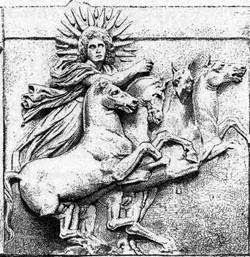
Across civilizations and epochs, the Sun and the Moon occupy a foundational place in ancient religions and mystery traditions. The Sun, bearer of life-giving power, was universally understood as the source of energy, vitality, and order. In many traditions, it assumes a masculine and patriarchal role, commonly associated with deities such as Phoebus–Apollo, Horus, or Helios.
The Sun is the most powerful visible light in the human sky. For countless cultures, it became one of the most revered symbols ever known—an arcane and monistic object of worship, often named Uno, God, Alpha and Omega, or the All-Mighty. It represented the Source of Creation, the Totality of the Universe, and the ultimate reason for life and human existence.

In ancient Egyptian religion, the Sun manifested through three principal forms:
Horus, the rising Sun;
Osiris, the setting Sun;
Ra, the perfect and complete Sun.
Ra embodies divinity revealed as light itself—pure cognition, understanding, and enlightenment. This is the light that casts no shadow: orthogonal, total, illuminating consciousness, subconsciousness, and the depths of the unconscious alike. The center of Egyptian solar worship was Heliopolis, and Ra stood as the ultimate symbol of clarity and awakened intelligence.
The Sun was also revered as Father, whose energy fertilizes Mother Earth, giving birth to all living beings across biological realms. Creation itself was understood as being nourished by this solar impulse—the sap of the Tree of Life.

In alchemy, the Sun corresponds to Gold, symbolizing incorruptibility and the unchanging spirit. It appears as the omniscient eye—the “Eye of the Supreme God”—watching all things, invoked in sources as diverse as Prometheus Bound or the cosmologies of the Bushmen.
Unlike the Moon, the Sun possesses its own light. It is not merely luminous—it is Light itself. Consequently, it is almost universally interpreted as a masculine symbol, aligned with the Yang principle in Daoism, representing activity, manifestation, and outward movement.

The Moon in Human History
The Moon, by contrast, is telluric, feminine, and matriarchal. Associated with deities such as Cybele, Isis, and Proserpine, it governs fertility, growth, and the rhythmic blossoming of life. Where the Sun generates, the Moon nurtures.
Iberian Ancient Prayers
In the Iberian Peninsula, lunar devotion endured well into popular tradition. One prayer, still remembered in Alentejo, Portugal, was spoken by pregnant women or mothers offering their newborns to lunar protection:
“Moon, Moonlight, take this baby, help me to create. You are a mother and I am a nurse. You create him and I will breastfeed him. In praise of the Virgin Mary. Our Father, Hail Mary.”
Here, the Moon is clearly associated with motherhood, gestation, and protection.
A more complex lunar vision appears in Apuleius’ The Golden Ass (Asinus Aureus), the only Roman novel to survive intact. In a syncretic prayer attributed to the donkey during an initiation ritual, the Moon is invoked as sovereign over all realms—human, animal, and inanimate—governing existence through her divine providence.
She is addressed as Ceres, Venus, Proserpine, Queen of Heaven, mistress of fertility and death alike. She illuminates cities with her feminine light, governs childbirth, appeases specters, opens and seals the arcana of the Earth, and modulates her brightness according to the revolutions of the Sun.
This prayer reveals the Moon’s triple nature:
creative and fertilizing;
erotic and generative;
chthonic and funerary.
As Proserpine—abducted into the underworld—the Moon becomes the emblem of descent, death, and return. She appears and disappears, living and dying cyclically, embodying the threshold between worlds.
"Queen of the heavens, are you Ceres creator of fruits (...); or are you the celestial Venus, who, at the first origin of things brought together the different sexes generating love, and propagated the human species of eternal descent ( ...), who, favoring women's childbirth with mild remedies, you have given birth to so many peoples (...); or are you Proserpine, horrible deity scaring us with her nocturnal howls, who repress with the triform face the impetuousness of the specters, and close the arcana of the earth and, wandering through different forests, you are appeased with different modes of worship: you who illuminate the walls of all cities with your feminine light, who create the happy seeds with your humid fire and scatter an uncertain light according to the revolutions of the Sun: by whatever name, whatever rites and under whatever form it is lawful to invoke you, you help me now in my extreme calamity (...), you give me peace and rest after such cruel misfortunes suffered”.
Interpretation
In the first prayer still prayed today by pregnant women or by mothers who are going to offer their babies to the Moon, the association of the Moon with femininity and motherhood is clear.
In the second prayer, the one that Apuleius attributes to the Ass, the Moon shows a more complex feature: sometimes represents creative, fertilizing symbol; queen and ruler of the human, animal and inanimate world; sometimes as symbol of love and sexual union, commonly associated with Venus.
But the Moon also appears associated with a deity from the underworld, Proserpine, "horrible for her nocturnal howls", as this deity, daughter of Zeus and Demeter (the Roman Ceres), was kidnapped by Hades/Pluto, the god of the dead who he made her his wife, living with her, part of the year, in the "bowels of the Earth".
The Moon in Iberian and Classical Tradition

Ancient authors such as Strabo recount that Celtiberian peoples offered sacrifices to a nameless god during full moon nights, dancing collectively until dawn. The Moon governed calendars, agricultural rhythms, tides, biological cycles, and the subtle clockwork of life itself:
"Some say that the Calaics had no god, but Celtiberians and their neighbors at North offered sacrifices to a nameless god, accordingly to each phase of the full moon, at night, at their front doors, and all families danced and sing together all night".

Diana—identified with Artemis—also absorbed lunar attributes, becoming protector of women, wilderness, and liminal passages. Many of the Moon’s darker folkloric associations (evil eye, illness, nocturnal fear) stem from this funerary and transitional role.
Yet it is precisely through this rhythm of Light and Darkness, Life and Death, that the Moon reveals her deeper meaning: transformation.
She has no light of her own, yet reflects solar light discontinuously—symbolizing growth, path, and becoming. From the mystical marriage of Sun and Moon, true Light is born. This union appears repeatedly in sanctuaries such as Soli Æterno Lunæ, at the foot of the Serra da Lua, in Sintra, Portugal.

This is also why some ancient calendars were governed by lunar cycles. The Moon in its connotation with the feminine world, with no Light of its own, that reflects Sun's Light discontinuously, also symbolizes transformation and growth, path and walk.

Sun and Moon in Ancient Rome
Caesar Augustus (63 BC – AD 14), (known to had used astrology to help legitimise his Imperial rights). Under Augustus, Roman religion underwent a deliberate restoration of ancestral values.
At the same time, the officialization of some eastern cults, gained many followers, either from middle east strangers in the west, or by Roman citizens and legionnaires, in particular, the cult of solar god of Persian origin, Mithra, the Persian solar god of Light, Truth, and Sacred Contract.
His central myth, the Taurobolium—the ritual sacrifice of the primordial bull—symbolizes death giving birth to life. From the bull’s blood spring fertility, seeds, and renewal. Initiates underwent multiple degrees, ascending seven symbolic steps, mirroring planetary and cosmic orders.
Christianity later absorbed and transformed these initiatory structures—replacing blood and flesh with baptismal water and Eucharistic bread and wine.
Introduced via Roman legions, Mithraism flourished across Hispania, including Tróia (Grândola) and Beja. Mithra emerges as a mediating force between solar and lunar principles—neither pure Sun nor pure Moon, but the essence of Light itself.
The Mithraic cult seems to have reached the West during the second century AD, via Roman legions. When the arrival of roman invaders to the Iberian Peninsula, and particularly of roman armies, a new surge of these orientalizing cults originated, despite their penetration in the West being from a period much earlier than the Roman period. At the portuguese Roman city of Tróia, Grândola, and in Beja, the Mithraic Cult is proven, which expanded in Hispania from the end of the 2nd century to the beginning of the 3rd century AD. C., along with other eastern cults, such as Solar Christus Serapis, Isis, Cybele-Magna Mater.
Sun, Moon, and the Western Edge of the World
At the Promontorium Sacrum (Cape St. Vincent), the westernmost edge of the known world, solar and lunar symbolism converge. Ancient authors described this place as terrifying, sacred, and inhabited by gods at night. Here, the Sun was said to rise at sunset, disappearing with a roar into the ocean.
This Finisterra—associated with Saturn, Kronos, Time—marked the boundary between the world of the living and the realm of the dead. It later became a site of pilgrimage, syncretism, and legend, culminating in the Christian mythos of Saint Vincent, whose body was guarded by crows—solar animals linked to light and vigilance.
Sun and Moon In Ancient Persia
The Sun or Ormuzd, for the Persians, as a source of Light, represented the Life, Health and Fertility of the earth as creator of all things necessary for the survival of Man; in turn, to the Moon or Arimanium, they attributed evil forces; the darkness and barrenness of the Earth.
Mithra thus appears as a third element, as a kind of mediating deity between two antagonistic forces, enabling the birth of a new day, that is, not allowing the Moon to hide the Sun. Mithra represents the Celestial Light, or the essence of Light, which emerges before the Astro-King rises and which still illuminates after it sets and, because it dispels darkness, it is also the god of Integrity, of Truth and Fertility, which is why it also appears in association with the genesis of the Bull (Taurus in Astrology), the primordial Bull that Mithra is tasked with killing: According to legends of Persian origin, Mithra received an order from the sun-god, his father, through his messenger in the form of a raven: "I should kill a white bull inside a cave".
The initiation ritual in the mysteries of Mithra was the Taurobolium, because it required the Sacrifice of a bull (in May, and distribute the meat by everyone in a festival), which was, in fact, common in the Eastern Mediterranean and Greco-Latin world, where this sacrifice assumes a foundational cultural character, since the cult of this animal is based on its sacredness in cosmic vigor and violence, and fecundating power. It's the ritual of the death of the bull that gives birth to life from his blood, enables fertility, provides the gift of seeds that, once collected and purified by the Moon, give us “fruits” and produces animal species, since his flesh is eaten and his blood is drunk. Candidates for the initiation of the Mithraic mysteries, practiced both in Persia and in Rome, had various degrees of initiation, undergoing severe tests and the initiate, before making his sacred vow (sacramentum), promised not to betray what had been revealed to him. Afterwards, the initiate climbed the seven steps, receiving a different name at each one steped.
The ritual of the death of the bull, the taurobolium, always under the Sun, also enables supporters of the Mithraic cult to experience the “birth to a new life” or “Rebirth” that Christianity, which banned the idea of initiatory sacrifice of the bull, transformed into the water of baptism and through the Eucharist into bread and wine, replacing the blood and flesh of the divine bull.
The solar god Mithra seems to have been born in a cave that symbolizes the firmament and, its vault, the sky from which the Light for the Earth will come out. For this very reason, the Mithraic initiation rituals were also practiced in caves.
The Solar-god Mithra in Algarve, Portugal
Mithra, who is always accompanied by the Sun, usually has a crow on her left – which, curiously, is also the totem of the solar god of Celtic origin Lug, - and in the left angle there is the figure of the Sun and, on the right, the Moon. But some believe that Lug also had the Promontorium Sacrum (St. Vicent's Cape, Algarve) as one of his places of worship. Due to this association, (that both Mithra and Lug have with ravens and solar cults) and also because the cape is also finistarrae (like the SOLI AETERNO LUNAE temple), the Promontorium Sacrum was that place where, since immemorial times, stones had been sacred, and the sunset been feared, because it's been said it makes a kind of roar when the Sun is setting down into the ocean.

Although it isn't known if whether Promontorium Sacrum is indeed St. Vincent's Cape or an area between Sagres Cape and St. Vincent's Cape, a fact is that the area has been described since antiquity. One of the first references to the promontory is Avieno, who in the "Ode Marítima", written in the 4th century AD, refers to it as Cinetic Cape: «...then, there, where the sideral light declines, the Cinetic Cape emerges towering, the extreme point of rich Europe, and enters the salty waters of the Ocean populated by monsters.» (vv 201-205)».
Avieno also mentions, the promontory was dedicated to Saturn, «...frightening due to its dangerous scarped rocks».
The Promontorium Sacro must have been, in the pre-Roman and Roman periods, an open-air sanctuary dedicated very possibly to the Punic god Baal Hammon, resulted of syncretism with Saturn of the Latins, as the geographer Strabo denies (other dedicatory), in the century I, the existence of any temple dedicated to Hercules or any other god on the site. Strabo describes the promontory as the westernmost point of Iberia:
«This is the westernmost point not only of Europe, but also of the entire oikouméne» (Str. III, 1, 4) where «It is not allowed to offer sacrifices even there overnight because they say the gods occupy it at that time. Those who go to visit him spend the night in a nearby village, and then, during the day, they go there carrying water, since the place doesn't have it.» (Str. III, 1, 4)
Strabo adds that, according to popular traditions, in this place, sun rises at sunset, setting with a noise, as if extinguishing in the waters of the ocean. (Estr. III, 1, 5) The West, beyond the Pillars of Hercules was, therefore, connoted with the lunar, infernal world and death, the «World of Darkness» as if it were the entrance to a fantastic and mythical world of the Dead (visited by Odysseus as described in the ancient Greek epic poem Homer's Odyssey), populated by monsters and the souls of the dead, where nature is inhospitable, where Saturn reigns.
Whether it was a sanctuary dedicated to Baal Hammon/Saturn or Melkart/Hercules, as some authors defend, it is, however, evident that this place is identified with sacred entities of clear maritime and astral connotation, as happened in other Finisterrae, as for example, Carvoeiro's Cape, Peniche, where Avieno, in his Ode Maritima, also attributes the cult of Saturn to the place. Incidentally, Kronos, Time, almost always appears linked to these places at the ends of the world where the Sun sets.
The Promontorium Sacrum has also always been a target of pilgrimage, having, in the period of Islamic domination, welcomed Christian and Muslim pilgrims who called it Chakrach. The Church of Corvo, associated with housing the relics of the Levantine saint St. Vicent, because legend says the body of the Holy Martyr from the 4th century would have washed up on the coast in this location, when it was taken from Valencia, where he had been martyred, to Lisbon , seems to have played a fundamental role in the very foundation of the Portuguese kingdom, whether or not D. Afonso I organized two expeditions to rescue the body of the saint, bringing it to Lisbon.
A place of Mozarabic worship, as we said above, Sagres would later host other more or less unsubstantiated legends, such as that it was the place where the "school" of navigators created by Infante D. Henrique was founded, who there, or quite possibly in the neighboring village of Vila do Bispo, he often stayed. There, in the Promontorium, the Holy Martyr, St. Vicent, was kept and guarded until it, always accompanied by crows, arrived Lisbon, in 1173 (the crow is an attribute of deities connoted with Light, became the symbol of Lisbon). It will also be the crows, according to the story, that will accompany the Portuguese, on their way to the Sun towards the West, following the Milky Way. In turn, since the year 274 AD, Emperor Aurelian made the cult of the undefeated sun god an official Roman cult, assuming this divinity an enormous importance in the Empire.

From that date to the year 387 A.D. the undefeated (invincible) sun cult retained official status.
The date of 25th December, celebrated as “natalis solis invicti”, ended up being adopted by the Roman Catholic religion as the date of the birth of Jesus Christ.
The expression undefeated, adds this author, means invincible and since the third century BC it had already been reffering to various deities such as Hercules, Apollo, Mars and Jupiter.
«The oldest recorded use of Sol Invictus is from the year 158 BC: “inventori lucis soli invicto augusto” (the inventor of light – the august sol invicto). There is probably a direct connection between the figure of the sun god and the figure of the Roman royal house, including the origin of the radiant crown, it has a direct connection with the association of the reigning figure and the sun god».
The Sanctuary of the Sun and the Moon – Serra de Sintra

The Sanctuary of the Sun and the Moon, whose design was included by Francisco de Holanda in his work "Da Fábrica que Faleçe ha Çidade de Lisboa", in 1571, having described it as follows: "a circle around full of typical memoirs of the Emperors of Rome".
It was a circular enclosure implanted in a platform, on which 16 prismatic wings were distributed, organized with regular spaces; in the center a rayed solar disk would be visible, probably executed in mosaic, which should have a lunar crescent on its left. However, it is accepted that Francisco de Holanda's drawing could be just a sketch, and the altars could be simple bases, or plinths of a colonnade or statues and have a number of twelve, giving astrological character to the sanctuary.
"We are clearly facing an intentional form of syncretism between a cult of an astral nature and the imperial cult, operated in a sanctuary laden with symbolism due to its unique geographic location and, perhaps, also heir to remote regional religious traditions, whether linked to the solar cycle or to the ancestral lunar and salutary goddess who, at night, would wander through the cliffs and through the dense forests of Monte Sagrado, Serra da Lua" (RIBEIRO, Cardim - Soli Æterno Lunæ. O Santuário, in Religiões da Lvsitânia-Loquuntur Saxa, Lisboa, Museu Nacional de Arqueologia, 2002, p. 236).
Closing Reflection
The Sun discloses.
The Moon transforms.
One generates; the other returns.
One is presence; the other is memory.
Together, they tell the Great Story:
Creation is not linear—it is rhythmic.
And at the heart of that rhythm stands Uno.
For more external info, see also:


Comments